Showing posts with label NEWS. Show all posts

Thursday, 18 October 2012

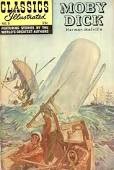
MOBY DICK´S 161st ANNIVERSARY

         
          Moby-Dick was published 161 years ago today in Britain - it came out in America later on 14 November 1851 - and is a book that is still considered one of the treasures of world literature.
          The book, which was originally published in England by Richard Bentley as The Whale, is a beautiful and beguiling novel, full of metaphor and imagery.
          The author Herman Melville, who was born in New York, (1819-1891) used his travels in the Pacific in the 1840s as the basis for Moby-Dick, which was published when he was 31. An example of the memorable prose is:

'There are certain queer times and occasions in this strange mixed affair we call life when a man takes this whole universe for a vast practical joke, though the wit thereof he but dimly discerns, and more than suspects that the joke is at nobody's expense but his own.'


Taken and adapted from Martin Chilton´s "The easy way to read Moby Dick," in http://www.telegraph.co.uk/culture/books/booknews/9616955/The-easy-way-to-read-Moby-Dick.html

Sunday, 16 September 2012

WHAT HAPPENED ON SEPTEMBER 16th, 1932?


                             September 16, 1932 

                             Gandhi Begins Hunger Strike


Bombay, 1932. After eight months in prison, Mohandas Karamchand Gandhi begins a hunger strike in protest of British support of a new Indian constitution that would condone separate political representation for India's lowest social caste -- otherwise known as the "untouchables."
For more than a decade, Gandhi had promoted a free and independent Indian state with his principle of passive resistence, which he called Satyagraha -- "insistence upon truth." To Gandhi, India's ability to free itself from British rule began with ending the historic division between social castes.
"This is a god-given opportunity that has come to me," Gandhi said from his prison cell at Yerovda, "to offer my life as a final sacrifice to the downtrodden." 
After six days without food and mounting social pressure, Gandhi successfully forced the hand of the British government, which reversed the separation decision and accepted the principal terms of a settlement between higher-caste Indians and the untouchables -- or as Gandhi called them, the "Children of God."

Written by Oliver Lee and taken from: http://www.takepart.com/article/2010/09/15/september-16-1932-gandhi-begins-hunger-strike

Monday, 10 September 2012

LONDON 2012: THE END OF A GREAT ADVENTURE

After 16 days of adrenalin and delight, of contests fought and won, of teary triumphs and devastating defeat, the Games of London 2012 are abruptly at a close.
Ten thousand athletes have headed home, the crowds dispersed, the cauldron extinguished. In their place, along with the unforgettable memories, is a sadness too that something so fun is now consigned to the past.
For the host nation, there was success beyond belief - 29 golds, 65 medals in total, won from Weymouth to Waltham Abbey and drawn from 19 disparate sports. Britons won medals standing and sitting, punching and kicking, swimming, biking and running and sometimes all three in succession.
Two and a half million people came to the Olympic Park; seven million saw some part of the Games in the flesh. Those denied access by bad luck or a creaking ticketing system watched on giant screens and small smartphones alike.
There were 70,000 volunteers who gave their time and cheery demeanour for free. Smiling members of the Armed Forces made bag-searches and security checks an easy pleasure.
As one wag said, these Olympics dragged millions of kids away from their computer games and motivated them instead to watch endless hours of sport on TV.
For now, with the memories still fresh, we are left with a series of vivid snapshots: Sir Wiggo on a gilded throne, seas of union jacks, Gamesmakers with giant foam fingers, and gold pillarboxes popping up around everyone's corner.
We saw dancing NHS nurses, BMX racers framed against a blue east London sky, a blighted corner of the capital awash with wildflowers, Usain doing the Mobot and Mo doing Usain's archer.
Now it's all over, there is just one more impossible thing to ask for: can we do this every summer?

Text taken and adapted from Tom Fordyce´s  www.bbc.co.uk

Friday, 9 March 2012

KONY 2012

Do you want to watch the video everybody is talking about? A campaign to let the world know about one of the most violent criminals in the world: Joseph Kony.
Kony 2012 is a video created by the organisation Invisible Children.

Thursday, 23 February 2012

COULD VEGETARIANS EAT A "TEST TUBE" BURGER?

The world could get its first lab-grown burger this year, with scientists using stem cells to create strips of beef. But could vegetarians eat it?
Scientists in the Netherlands hoping to create a more efficient alternative to rearing animals have grown small pieces of beef muscle in a laboratory.
These strips will be mixed with blood and artificially grown fat to produce a hamburger by the autumn.
The stem cells in this particular experiment were harvested from by-products of slaughtered animals but in the future, scientists say, they could be taken from a live animal through biopsy.
One usually assumes the main motivation for vegetarianism - aside from those who practise for religious reasons - is about the welfare of animals. The typical vegetarian forswears meat because animals are killed to get it.
So if the meat does not come from dead animals would there be an ethical problem in eating it if it one day lands on supermarket shelves?
It's not as simple an equation as that, says Prof Andrew Linzey, director of the Oxford Centre for Animal Ethics. He says the burger as currently envisaged isn't an acceptable substitute for vegetarians, but is still a step forward.
"Synthetic meat could be a great moral advance. It won't be suitable for vegetarians because it still originates in meat by-products, but bearing in mind that millions of animals are slaughtered for food every day, it is a step forward to a less violent world."
According to the Vegetarian Society, a vegetarian does not eat "any meat, poultry, game, fish, shellfish or crustacea, or the by-products of slaughter".
The lab-grown meat created so far has been grown from stem cells taken from foetal calf serum. This is usually a by-product of slaughter, although stem cells could be harvested in smaller volumes without killing animals.
Prof Julian Savulescu, the director of the Oxford Uehiro Centre for Ethics, says it doesn't matter how the product is made and "the fact that the meat is made from animal by-products is morally irrelevant".
"People who are vegetarian for moral reasons - the environment, the treatment of animals - have a moral obligation to eat this meat.
"They need to do this because it will contribute to an ethical alternative to conventional meat."
For many vegetarians though, the issue is a complicated one.
"Some are waiting with bated breath, keen to experience the taste and texture of meat without actually harming an animal, while others find the whole idea utterly repulsive," says Su Taylor from the Vegetarian Society.
Just because the meat has been grown artificially doesn't mean it is vegetarian, says Vegetarians International Voices for Animals (Viva). But Viva insists vegetarianism and veganism aren't religions so individuals should make up their own minds.
"Certainly, with over 950 million land animals slaughtered in the UK each year," says Viva spokesman and campaign manager Justin Kerswell, "and the vast majority of them factory farmed in awful conditions, anything that saves animals from suffering is to be welcomed."
There's already been discussion about whether meat eaters could be persuaded to eat the artificial meat, but at the moment the price tag is likely to be prohibitive. The first lab-grown burger is likely to cost in the region of £200,000 to produce.
Savulescu says most people won't give up meat, but if there was a palatable alternative, conventional meat eaters might move to it.
"Moral vegetarians need to promote, use and consume this test tube meat," Savulescu said. "Then it will become cheaper."
The research on artificial meat has been prompted by concerns that current methods of meat production are unsustainable in the long term.
But to Kerswell, the research seems unnecessary, particularly as many vegetarians believe a diet excluding meat is more healthy.
"Why grow it in a Petri dish or eat the meat from a slaughtered animal when plant sources of protein and meat replacements are ever more commonly available and are better for our health?"
Of course, there are plenty of nutritionists who speak of the value of eating some meat. Dr Elizabeth Weichselbaum, a nutrition scientist at the British Nutrition Foundation, says meat is an important source of a number of nutrients in our diet, including high quality protein, iron, zinc, selenium, vitamin D and some B vitamins.
"It can make an important contribution to a healthy and balanced diet. Meat and other protein sources, including eggs, beans and nuts, should be eaten in moderate amounts."
So could vegetarian chefs be persuaded? Denis Cotter, who runs a vegetarian restaurant in Cork, Ireland, says "after an instinctive shudder of revulsion" he can see the benefits of the burger, but it won't be making its way on to any of his menus.
"Personally, I don't like synthetic food, and avoid all that soy-based fake meat stuff aimed at vegetarians. So, no, I wouldn't be interested in using it, either as a restaurant product or on my plate at home. But I would back it as a better way to produce meat than burning down rainforests and gobbling up useful farmland."

(Taken from BBC News Magazine and written by Chi Chi Izundu)
Tuesday, 14 February 2012

THE ST. VALENTINE´S DAY MASSACRE

On this frigid morning, in an unheated brick garage at 2122 N. Clark St., seven men were lined up against a whitewashed wall and pumped with 90 bullets from submachine guns, shotguns and a revolver. It was the most infamous of all gangland slayings in America, and it savagely achieved its purpose--the elimination of the last challenge to Al Capone for the mantle of crime boss in Chicago. By 1929, Capone's only real threat was George "Bugs" Moran, who headed his own gang. Moran had long despised Capone, mockingly referring to him as "The Beast."

At about 10:30 a.m., four men burst into the SMC Cartage Co. garage that Moran used for his illegal business. Two of the men were dressed as police officers. The quartet presumably announced a raid and ordered the seven men inside the garage to line up against a wall. Then they opened fire. Witnesses, alerted by the rat-a-tat staccato of submachine guns, watched as the gunmen sped off in a black Cadillac touring car that looked like the kind police used, complete with siren, gong and rifle rack.The victims, killed outright or left dying in the garage, included Frank "Hock" Gusenberg, Moran's enforcer, and his brother, Peter "Goosy" Gusenberg. Four of the other victims were Moran gangsters. Missing that morning was Capone's prize, Moran, who slept in.

Capone missed the excitement too. Vacationing at his retreat at Palm Island, Fla., he had an alibi for his whereabouts and disclaimed knowledge of the coldblooded killings. Few believed him. No one ever went to jail for pulling a trigger in the Clark Street garage, which was demolished in 1967.

Although Moran survived the massacre, he was finished as a big criminal. For decades to come, only one mob, that of Capone and his successors, would run organized crime in Chicago. But the Valentine´s Day Massacre shocked a city that had been numbed by "Roaring '20s" gang warfare over control of illegal beer and whiskey distribution.
(by John O´Brien - The Chicago Tribune)